 Gensuki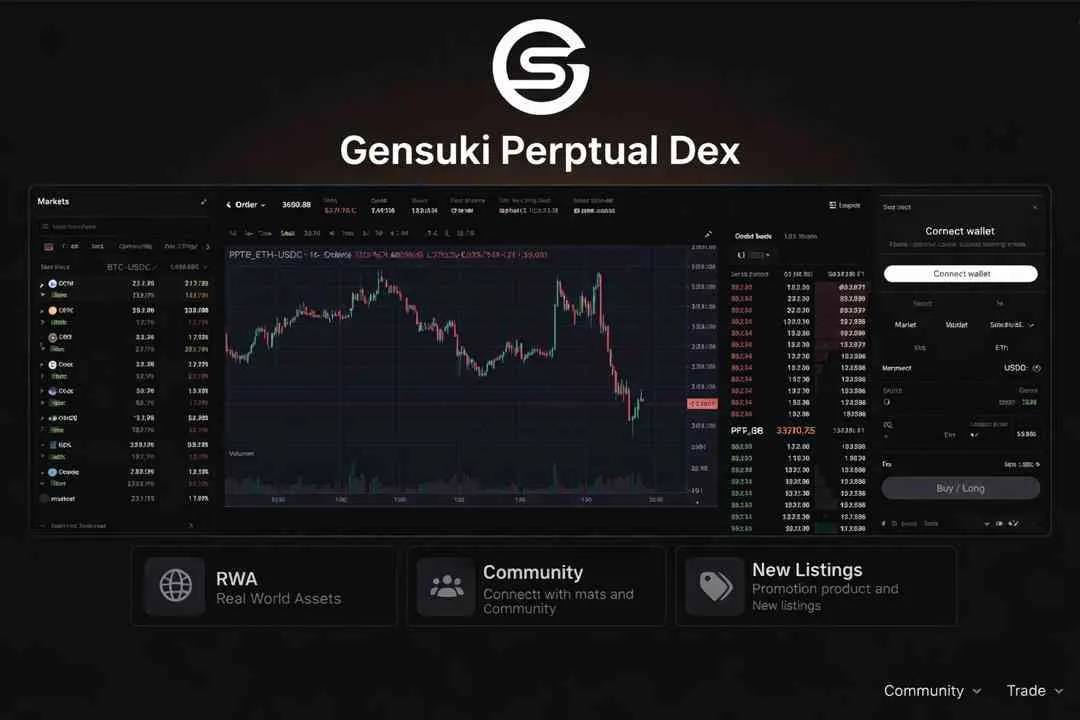
DEEP DIVING THE GENSUKI PERPETUAL DEX MULTI-ASSET TRADING TERMINAL
SUMMARY: THE ARCHITECTURE OF FUTURE MARKETS The inclusion of foreign currency perpetuals within a decentralized environment highlights the long-term trend of traditional and decentralized financial systems merging.

Table of Contents
Introduction.
The boundaries separating decentralized finance (DeFi) from legacy capital markets are undergoing a fundamental transformation. Historically, digital asset primitives operated within a highly isolated sandbox, detached from the deep liquidity pools of traditional global finance. Traders wanting exposure to both sectors were forced to fragment their capital across centralized exchanges, traditional brokerage firms, and on-chain protocols.
Gensuki Perps addresses this fragmentation through its advanced perpetual decentralized exchange (DEX) terminal. By integrating Real-World Assets (RWAs) directly into a high-performance, on-chain perpetual trading environment, the protocol unifies crypto native assets with traditional finance (TradFi) vehicles. This architectural shift enables traders to navigate macro trends, hedge structural exposures, and utilize deep financial leverage without leaving the decentralized ecosystem.
The core of this evolution lies in the deployment of legacy foreign exchange (Forex) pairs within a permissionless framework. With the launch of the EUR/USD and USD/JPY perpetual contracts, Gensuki provides direct access to the world’s most liquid fiat currency corridors. Settled exclusively in USDC and boasting up to 20x leverage, these instruments establish Gensuki as an institution-grade, multi-asset trading hub.
The Paradigm Shift: RWAs in a Perpetual Trading Environment:
Traditional real-world asset tokenization has historically focused on spot assets, such as fractionalized real estate or tokenized short-term U.S. Treasury bills. While useful for generating low-risk yield, spot tokenization lacks the capital efficiency required by sophisticated macro traders. Gensuki transforms this paradigm by applying synthetic perpetual futures design to real-world underlying assets.
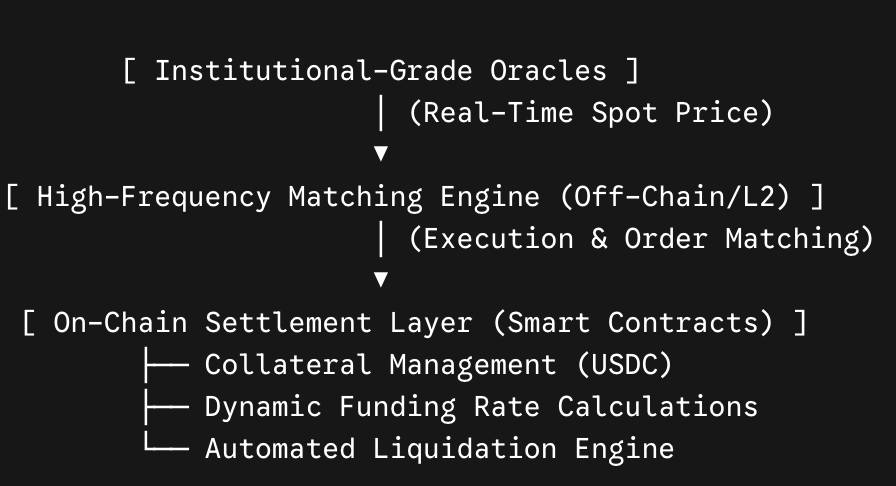
Perpetual contracts have no expiration dates, eliminating the friction of contract rollovers that characterize traditional futures markets. By wrapping global macro pairs like the Euro and the Japanese Yen into on-chain perpetual mechanics, Gensuki allows capital to move fluidly between decentralized crypto assets and multi-trillion-dollar sovereign currency pairs. This integration is powered by institutional-grade decentralized oracle networks that feed real-time spot pricing to the on-chain settlement layer.
The introduction of these pairs serves a strategic function. In moments of heightened crypto market volatility, traders can pivot to traditional macro assets to capitalize on interest rate announcements, geopolitical developments, or global central bank actions. Conversely, traditional FX traders can transition their capital into crypto primitives within the same trading account, maximizing capital utilization.
Deconstructing the Global Forex Additions
The EUR/USD Perpetual Contract
The Euro against the United States Dollar represents the single most traded currency pair globally, acting as the primary gauge of macroeconomic health between the Western hemispheres. On Gensuki, the EUR/USD perpetual market allows traders to speculate on or hedge against transatlantic economic shifts. Settled fully in USDC, it eliminates the need for traders to hold physical Euros, pricing all margin, profit, and loss statements in a familiar dollar-denominated stablecoin.
Trading URL: http://perps.gensuki.xyz/perp/
The USD/JPY Perpetual Contract
The Japanese Yen is historically utilized as a global funding currency and a classic safe-haven asset. The USD/JPY pair is highly reactive to interest rate differentials, specifically the yield gap between the U.S. Federal Reserve and the Bank of Japan. Offering an on-chain perpetual vehicle for this specific pair enables sophisticated interest-rate arbitrage and carry-trade strategies directly inside a Web3 framework.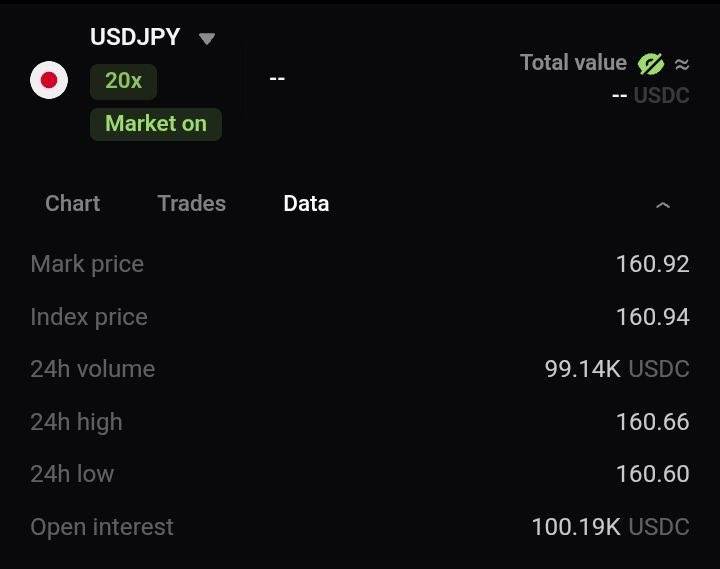
Core Specifications of the RWA Trading Module
Gensuki’s engineering architecture treats real-world assets with the same precision and execution speeds as crypto native contracts. The table below details the current operational parameters governing these newly listed currency pairs.
RWA Forex Perpetual Specifications
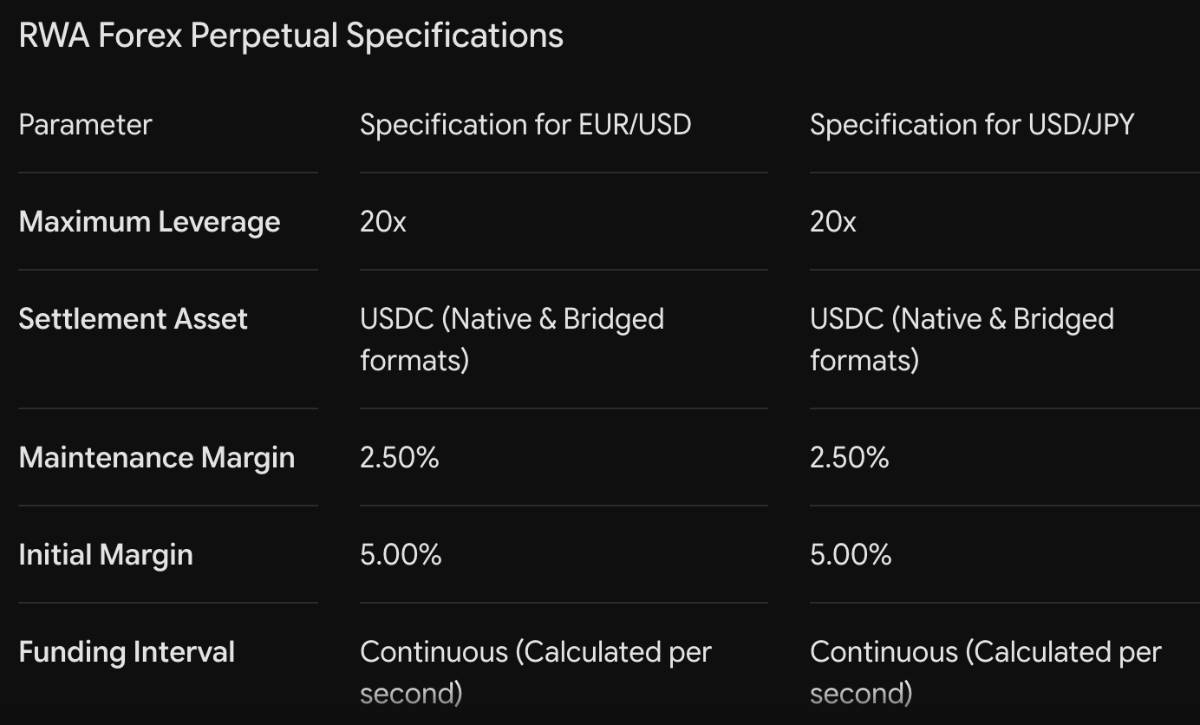
The deployment of a 2.50% Maintenance Margin means positions can run with minimal overhead, but it requires highly precise liquidation engines to protect the underlying liquidity pools from bad debt during sudden macro gaps.
Architectural Mechanics: Order Matching and On-Chain Settlement
To achieve the performance required to handle high-frequency forex data feeds, Gensuki employs a hybrid infrastructure stack. Traditional blockchains suffer from latency and block-time constraints that make order book updates for highly liquid assets inefficient. Gensuki bypasses this limitation by running an off-chain or optimized Layer-2 matching engine linked to an on-chain settlement layer.
When a trader submits a market order via the terminal, the order is matched almost instantly inside the high-frequency matching engine. Once matched, the cryptographic proof of the execution is routed back to the underlying smart contracts for settlement. This design keeps execution latency low while maintaining the security, self-custody, and transparency of decentralized ledgers.
+------------------------+ +--------------------------+ +-------------------------+
| Traders (UI/API) | ---> | L2 Matching Engine | ---> | Smart Contracts |
| - Submits Limit/Mkt | | - Sub-millisecond match | | - Collateral Locking |
|
- Manages Leverage | | - Order book aggregation| | - On-chain Settlement |
+------------------------+ +--------------------------+ +-------------------------
The settlement contracts hold the USDC collateral securely in decentralized pools. If a position incurs a loss, the corresponding USDC is deducted from the trader's margin account and credited to the opposing counterparty or the liquidity provider vault. No centralized entity can freeze, rehypothecate, or misappropriate the collateral during this cycle.
The Role of USDC Settlement and Margin Optimization
Choosing USDC as the unified settlement asset provides distinct operational advantages for cross-asset portfolios. Traders can execute cross-margining strategies, where a single pool of USDC collateral backs multiple open positions across different asset classes simultaneously.
For instance, a trader can hold a long BTC position, a short ETH position, and a long USD/JPY position, all secured by the same USDC balance. If the BTC position moves into profit, that unrealized profit directly increases the available margin to sustain or expand the USD/JPY trade. This multi-market cross-margining model maximizes capital efficiency and eliminates the friction of maintaining separate isolated collateral pools for different markets.
The Mathematical Engine: Funding Rates & Premium Tweaks
Perpetual contracts rely on a dynamic funding rate mechanism to prevent the price of the perpetual contract ($P_{\text{perp}}$) from drifting away from the actual spot index price ($P_{\text{spot}}$) of the asset. Because traditional forex markets trade 24 hours a day during the week but close on weekends, Gensuki utilizes a continuous pricing oracle model that adapts when traditional markets close.
The funding rate ($F$) is calculated continuously based on the premium component ($P$) and the interest rate differential ($I$). The core formula is structured as follows:
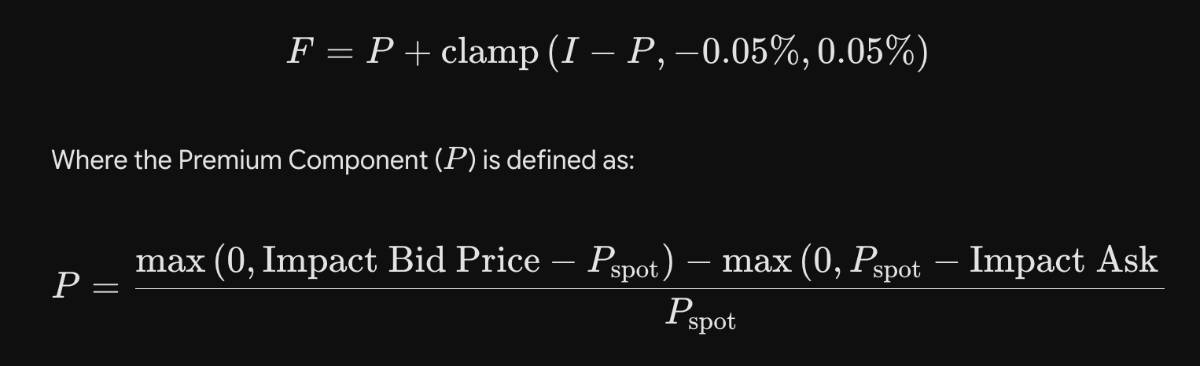 When the perpetual contract trades at a premium relative to the spot market (buyers dominate), the funding rate turns positive. Long positions must then pay short positions every second. This financial disincentive encourages arbitrageurs to step in, short the premium, and push the perpetual price back into alignment with the real-world index.
Cross-Chain Infrastructure and Multi-Layer Interoperability
Gensuki’s terminal operates across a decentralized network configuration, enabling users to trade regardless of their native chain choice. Through advanced cross-chain messaging bridges and liquidity aggregation frameworks, the terminal supports seamless wallet connections from multiple Layer-1 and Layer-2 ecosystems.
Supported Network Frameworks
Arbitrum & Optimism: High-speed Ethereum Layer-2 environments providing low gas footprints for rapid portfolio rebalancing.
Base: Deeply integrated with native USDC pools, ensuring low slippage on capital entry and exit points.
EVM-Compatible Alternates: Allowing deep liquidity to route straight from high-throughput environments directly into the execution vaults.
This multi-chain approach guarantees that a trader holding capital on an L2 chain can interact with the RWA engine without executing slow, costly structural migrations back to the mainnet.
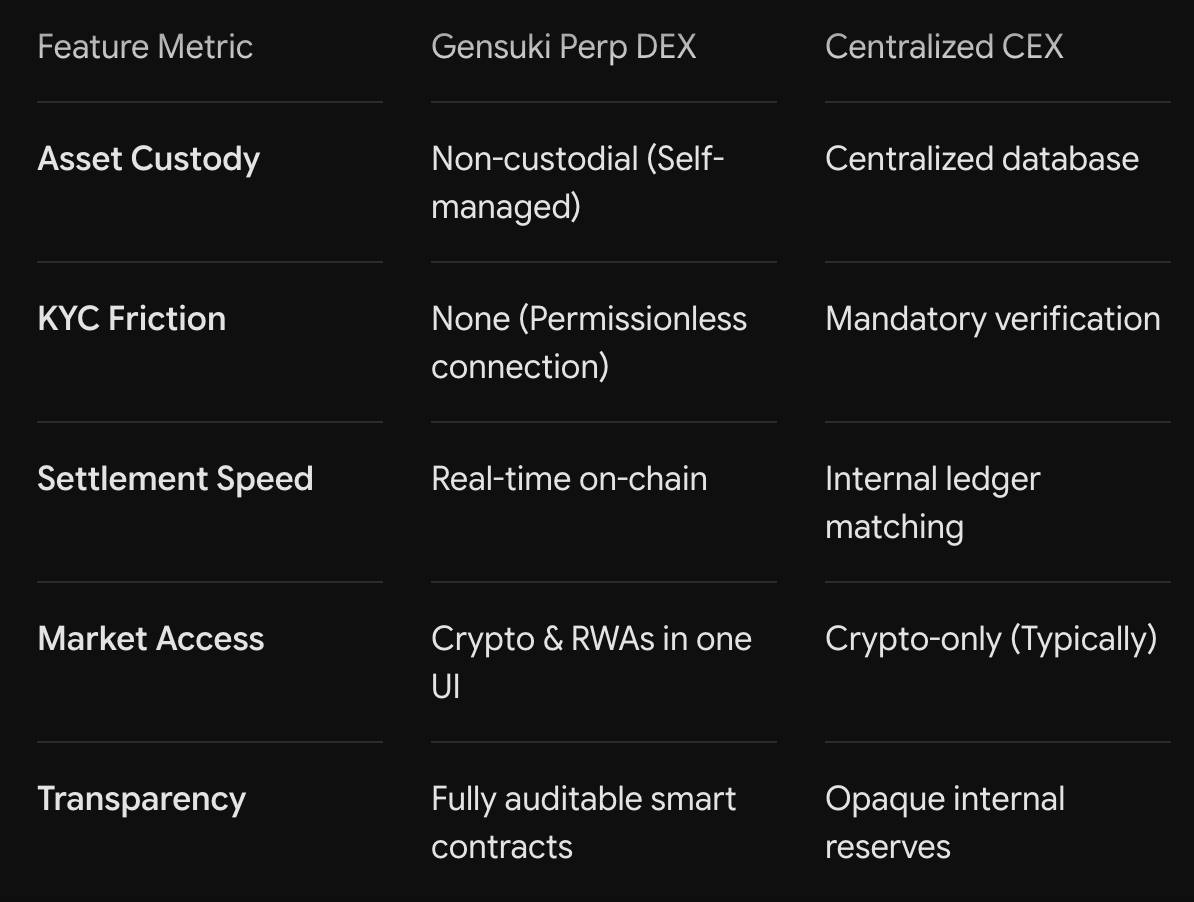
Comparative Advantage Analysis
The structural advantages of Gensuki's approach become clear when compared to centralized exchanges (CEXs).
Competitive Matrix across Trading Infrastructure
 Advanced Strategic Applications for Sophisticated Portfolios
Global Macro Hedging:
Traders holding significant exposure to decentralized yield farms or directional long crypto positions can protect their dollar-purchasing power against broader fiat decay. If macroeconomic markers point to a strengthening dollar due to unexpected rate hikes, the trader can open a highly leveraged short position on EUR/USD to offset potential drawdown in their digital asset base.
Stablecoin Carry Trading:
The USD/JPY perpetual engine allows users to capitalize on global interest rate variations. Traders can leverage their USDC to short the Yen when the yield spread widens, using the capital efficiency of 20x leverage to turn minor basis point adjustments into meaningful structural returns.
Risk Mitigation Frameworks and Liquidation Logic:
Leveraged trading requires strict automated protection protocols to preserve systemic solvency. Gensuki operates a multi-tiered liquidation engine that executes continuously without human intervention.
If a trader’s margin account falls below the required Maintenance Margin Level (2.50%), the liquidation engine takes control of the position. The engine gradually unloads the position into the order book to avoid crashing the local spread. If market conditions gap faster than the engine can liquidate, the Gensuki Insurance Fund steps in to absorb the negative balance, ensuring the underlying liquidity provider pools remain fully protected from bad debt.
Conclusion: The Architecture of Future Markets:
The inclusion of foreign currency perpetuals within a decentralized environment highlights the long-term trend of traditional and decentralized financial systems merging. By addressing the core requirements of high leverage, self-custody, and multi-market access, Gensuki establishes a template for modern capital allocation.
Traders are no longer restricted to siloed asset classes or dependent on centralized middlemen to access global markets. With real-time settlement in USDC, robust cross-chain connectivity, and institutional-grade execution speeds, the terminal provides the tools necessary to trade with intent and adapt quickly to shifting global macro trends.